
Waddlers Program
Finding Your Footing
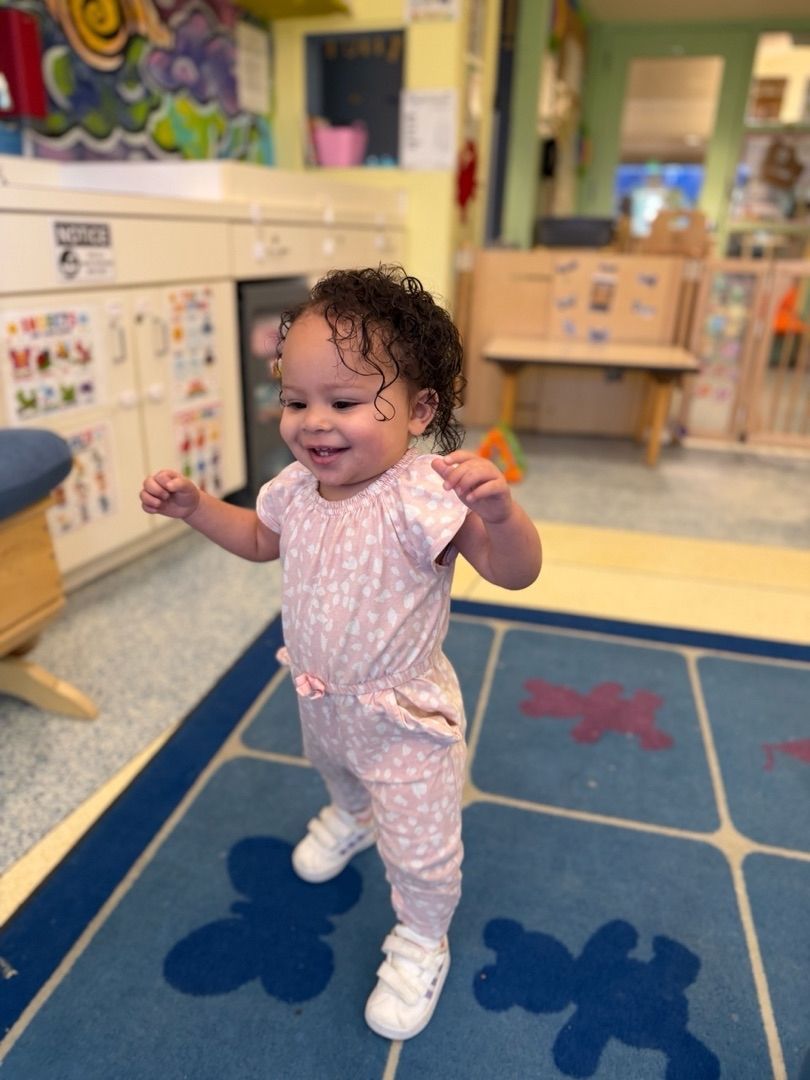
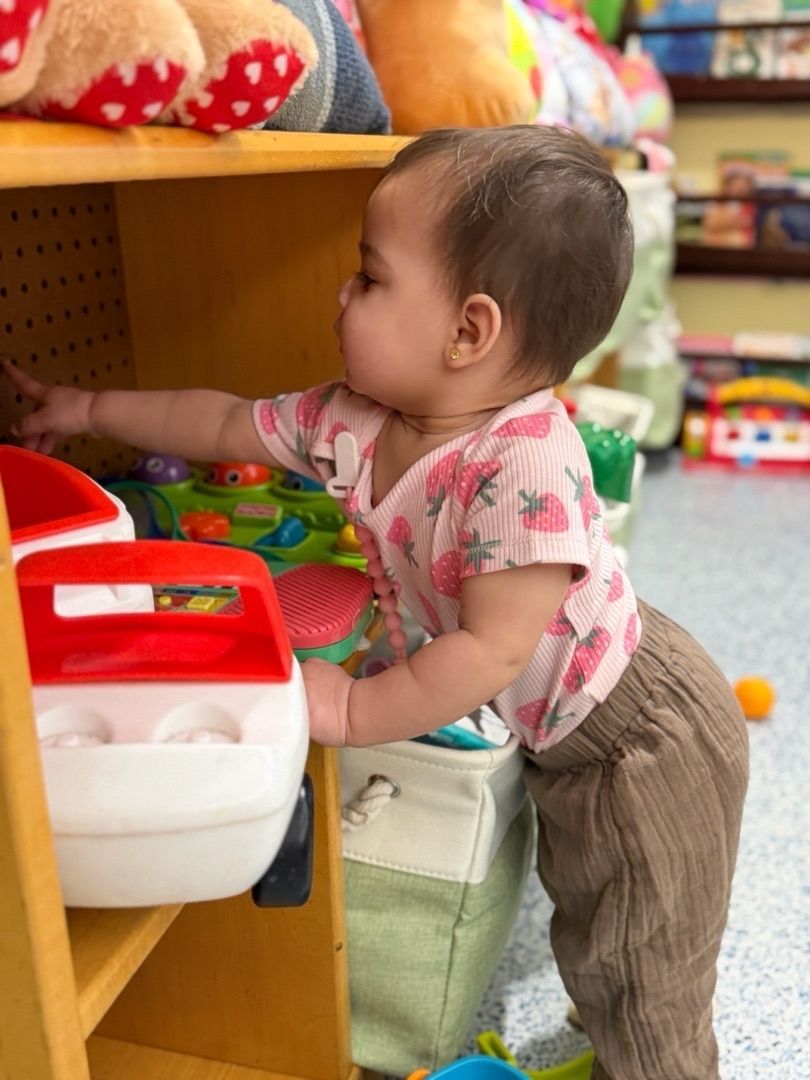
Our Waddler Program serves children ages 10 to 24 months, the stretch between an infant's first steps and a toddler's first full sentences. This is where balance turns into walking, babbling turns into words, and dependence starts turning into "I can do it." Waddlers get their first real access to the playground and the Great Room, spaces they could only watch from a distance as infants. The classroom builds on the trust established in infancy while introducing more structure, more independence, and more expectation.
Curriculum Areas
The Experience Curriculum continues here, shifting from the relationship based foundation of infancy toward the more active, exploratory learning young toddlers are ready for. A child in the Waddler Program will:
Strengthen the gross motor skills that prepare the body for the toddler classroom, including steadier walking, climbing, and coordinated movement.
Begin using early sign language to communicate before speech catches up.
Take part in group art, pretend play, and expressive language activities that build on the foundational skills started as an infant.
Practice safe socialization with peers as they move from parallel play toward the first stages of playing alongside one another.
Goals for Waddlers
Curiosity and Exploration: We give waddlers structured and open-ended opportunities to explore through group art, pretend play, and guided activities that build on what they learned as infants.
Curiosity and Exploration
We give waddlers structured and open-ended opportunities to explore through group art, pretend play, and guided activities that build on what they learned as infants.
Healthy Body
We support the physical growth that comes with this stage, from steadier walking and climbing to the coordination needed for group activities and playground time.
Family and Community
We keep communication consistent with families through this transition, particularly around new routines like moving from crib to cot and high chair to table.
Signs of Readiness
We track each child's development closely to determine when they are ready to move into the Toddler Program.
Waddler Skills Through Play
Language and Literacy
Waddlers begin using basic sign language, including more, all done, thank you, please, play, help, hungry, and thirsty, to communicate before verbal language is fully developed. We also encourage animal sounds, identifying body parts, and early expressive language.
Physical Movement
We focus on strengthening the gross motor skills that prepare children for the toddler classroom, including steadier walking, climbing, and improved coordination.
Fine Motor Skills
Group art activities help waddlers build hand strength and control, from holding crayons to manipulating simple materials and utensils during meals.
Social and Emotional Learning
Waddlers begin safe socialization with peers through pretend play and guided group activities, building the foundation for cooperative play in the toddler classroom.
Self-Help Skills
We introduce handwashing as a child's first hygiene routine, along with self-feeding and cleaning up after activities, building the independence that carries into the toddler classroom.
Frequently Asked Questions
What ages are in the Toddler Program?
Our Waddler Program is for children ages 10 to 24 months.
How does feeding work?
Waddlers transition from high chair to table between 10 and 12 months as they show readiness. We encourage self-feeding as part of building independence, and children with extra feeding needs are accommodated individually. We offer formula, baby food and table foods and can include breast milk, purees or table foods sent from home to aid in the transition.
What about naps?
Waddlers typically transition from crib to cot after their first birthday. Children who need extra naps are accommodated as needed.
What curriculum do you use?
We use The Experience Baby Curriculum, specifically the “Younger toddler” portion.
What does a typical day in a Waddler Room look like?
6:30-9 Arrival and free play
9-9:30 Breakfast
9:30-11:30 Circle Time, Outdoor Play, Great Room Play, and Teacher Led Activities
11:30 Lunch
12:30-2:30 Nap Time
2:30-3 Wake up transition
3 Afternoon Snack
3:30-5 Outdoor Play, Great Room Play, and Child Led Activities
5-6 Free play and dismissal
Children who require additional feedings or naps are accommodated individually.
Do you potty train in the Waddler Room?
Not yet. We introduce handwashing as the first step toward independent hygiene, setting the foundation for potty training in the Toddler Program.
Are there enrichment opportunities?
Yes! Waddlers take part in walking field trips, gardening, visiting the book fair, and water play.
After Waddlers, where does my child go?
Waddlers can transition to either Toddlers or Big 3s based on development, date of birth, acquired skills and signs of readiness.
What is the ratio for this age group?
Ratio is 4:1 and classroom size is 8 children.