

Infant Program
Learning Starts Here
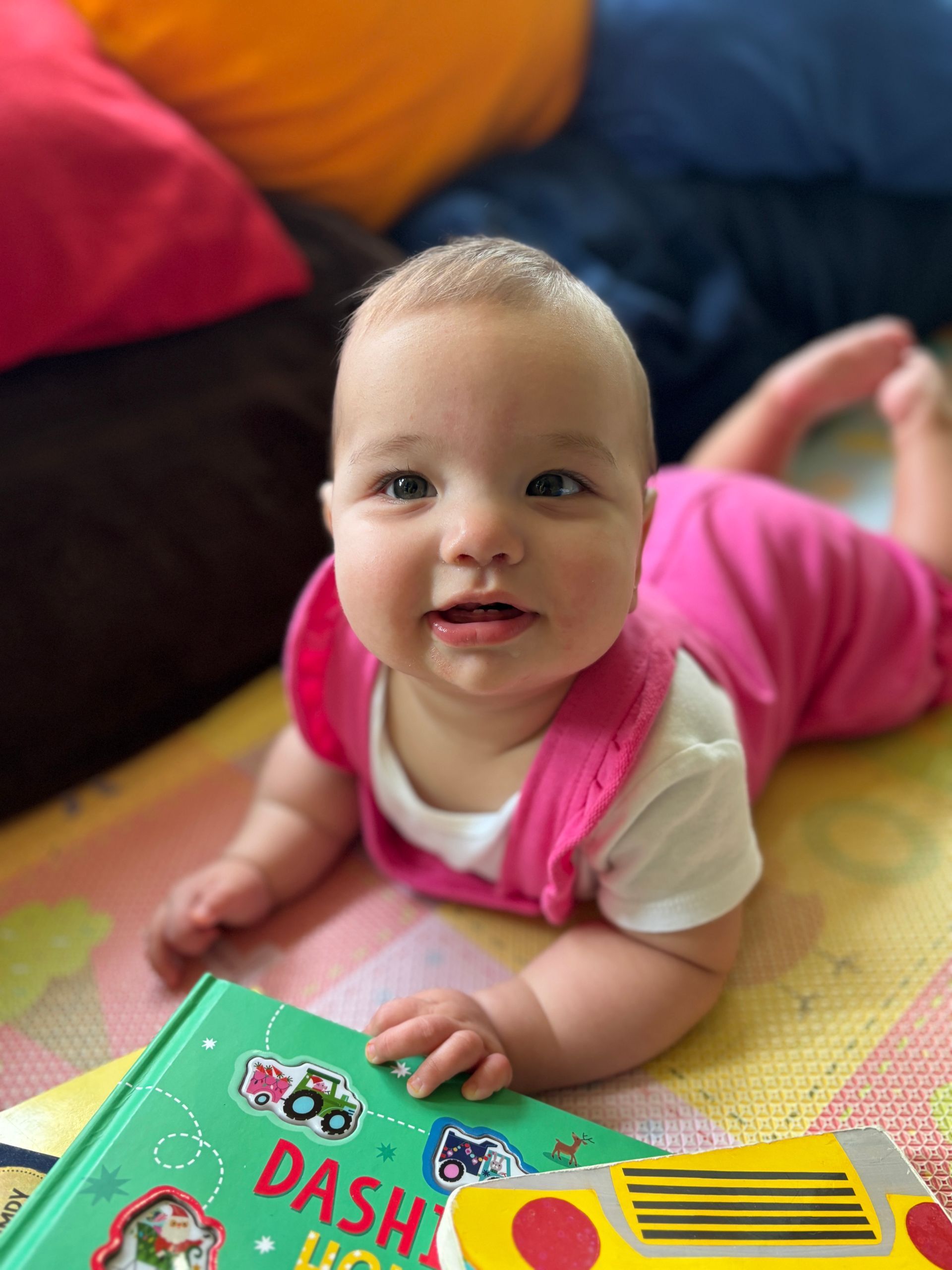
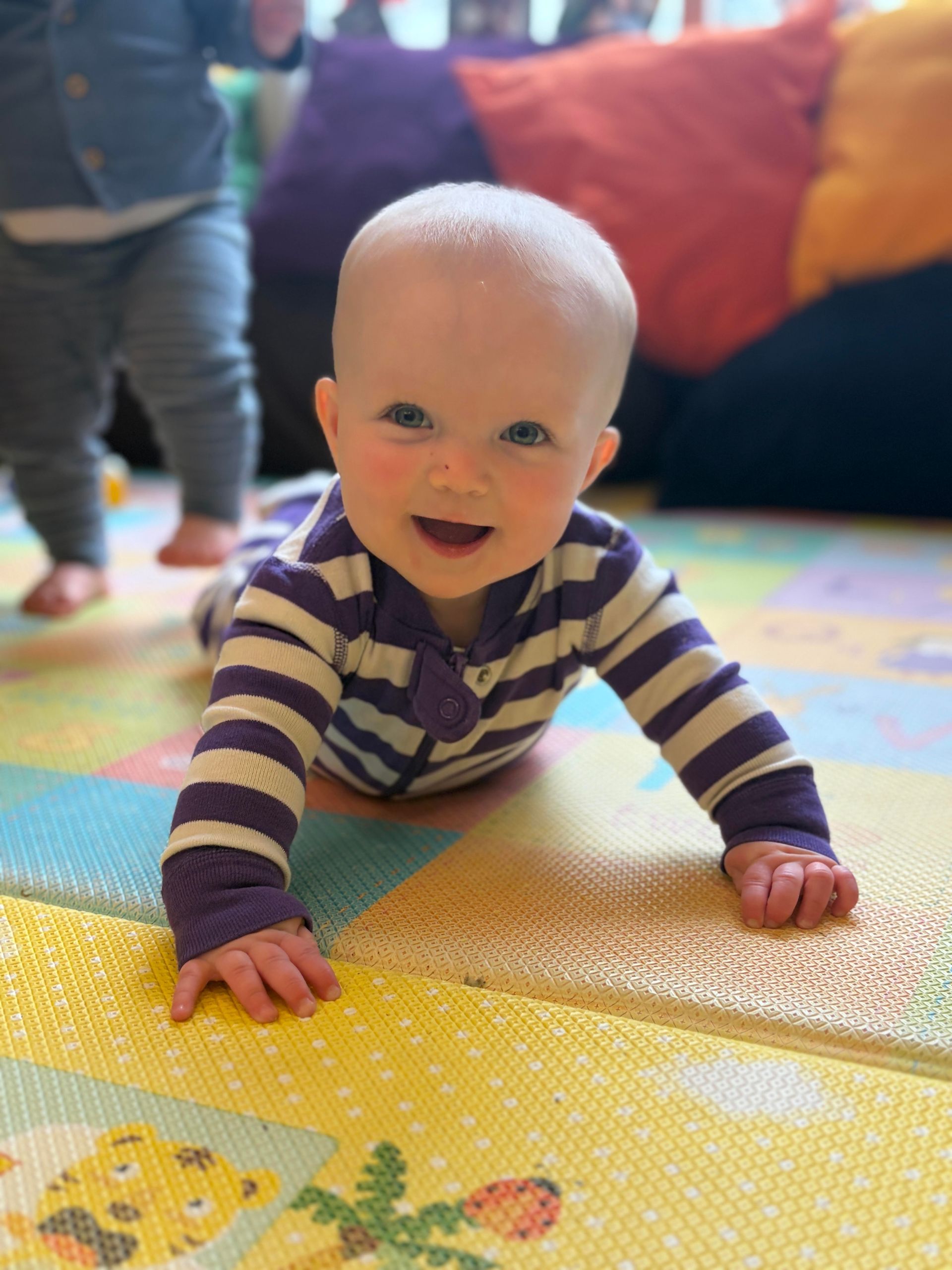
Our Infant Program is for ages 6 weeks to 12 months, for many being the family’s and child’s first introduction to childcare. In the infant classroom, babies will form positive and trusting relationships with caregivers outside their family, explore the environment with plenty of free movement and reach big milestones like rolling, sitting, crawling, walking and starting solid foods. The classroom routine is adapted to each child’s needs, respecting the family’s feeding and nap preferences while balancing play experiences.
Curriculum Areas
The Experience Baby Curriculum is a nationally recognized educational program designed uniquely for infants from birth to 18 months, supporting relationship-based play and discovery. A child participating in the program will:
Build emotional connections that are key for developmental growth.
Have access to specialized sensory tools and toys that invite them to explore and make sense of their environment.
Engage in playful activities that stimulate their brain and support their development of 23 foundational skills
As your child grows, the Experience Baby Curriculum helps the teacher individualize the experience and increase the challenge so that each child consistently learns at their unique pace.
Goals for Infants
Curiosity and Exploration: We help infants enjoy learning through routines, play, and simple hands-on activities both teacher-led and student-led.
Curiosity and Exploration
We help infants enjoy learning through routines, play, and simple hands-on activities both teacher-led and student-led.
Healthy Body
We support physical development for motor growth and dietary transitions.
Family and Community
We engage in mutual trust with the babies and their families to offer peace of mind and consistency for all.
Signs of Readiness
We closely observe each child’s development and skills to suggest transitions and determine the most appropriate age group to move up to.
Infant Skills Through Play:
Language and Literacy
Infants start building communication skills by listening and responding to the people around them. We help them recognize their name, respond to facial expressions, and begin simple back-and-forth exchanges. We also aid early understanding of simple directions and speech development through gestures, babbling and first words.
Physical Movement
We focus on early movement milestones as infants grow stronger and more confident. This includes head control, rolling in both directions, sitting up, crawling, pulling up and eventually walking.
Gross and Fine Motor Skills
We help infants build both gross and fine motor skills through activities like rolling balls, holding large objects, carrying items, using hand-held items, stacking and placing items inside boxes or containers.
Social and Emotional Learning
We help infants build trust and feel safe with familiar adults. We encourage self-soothing and help children develop a sense of self, including recognizing themselves in a mirror. Infants also learn to express emotions through facial expressions and gestures, and they build connection through singing and clapping along with songs.
Frequently Asked Questions
What ages are in the Infant Program?
Our Infant Program is for children ages 6 weeks to 12 months.
How does feeding work?
Our center offers Iron Fortified Similac Formula, baby food and 3 meals of table foods. Upon enrollment, families fill out a feeding schedule to outline feeding times, amounts and preferences. Families may bring in breast milk, their preferred formula or baby food from home.
How is staff turnover in Infant Rooms?
Infants require the most consistency and familiar faces to feel safe. Our infant Lead Teacher has been with Good Child for 12 years and has personally trained the assistants.
What curriculum do you use?
We use The Experience Baby Curriculum.
What does a typical day in a Infant Room look like?
6:30-9 – Arrival , free play and first feedings
9-9:30 – Breakfast for children on table foods
9:30-11:30 – Circle Time, Outdoor Play, Art and Group Activities
11:30 – Lunch for children on table foods, second feedings
12 – 2:30 – Nap Time
2:30 – 3:30 – Outdoor Play, Great Room Play and Child-led activities
3:30-6 – Stroller walks, forth feedings, second naps, free play and dismissal.
How often are diapers changed?
Diapering happens every 2 hours at least or sooner if diaper is soiled.
How do you help infants feel safe and supported?
We focus on trusted relationships with familiar adults, self-soothing, encouragement and communication with the family to assist with separation.
Are there enrichment opportunities?
Yes! Infants take part in walking field trips, gardening, visiting the book fair and water play.
After Infants, where does my child go?
It depends on their development and age. Most children transition from Infants to Waddlers between 9 and 12 months. However, some children who develop quickly may move directly to toddlers if they are walking stably, socializing appropriately and ready for higher expectations.
What is the ratio for this age group?
Ratio is 4:1 and classroom size is 8 children. The infant room usually has 3 teachers.